

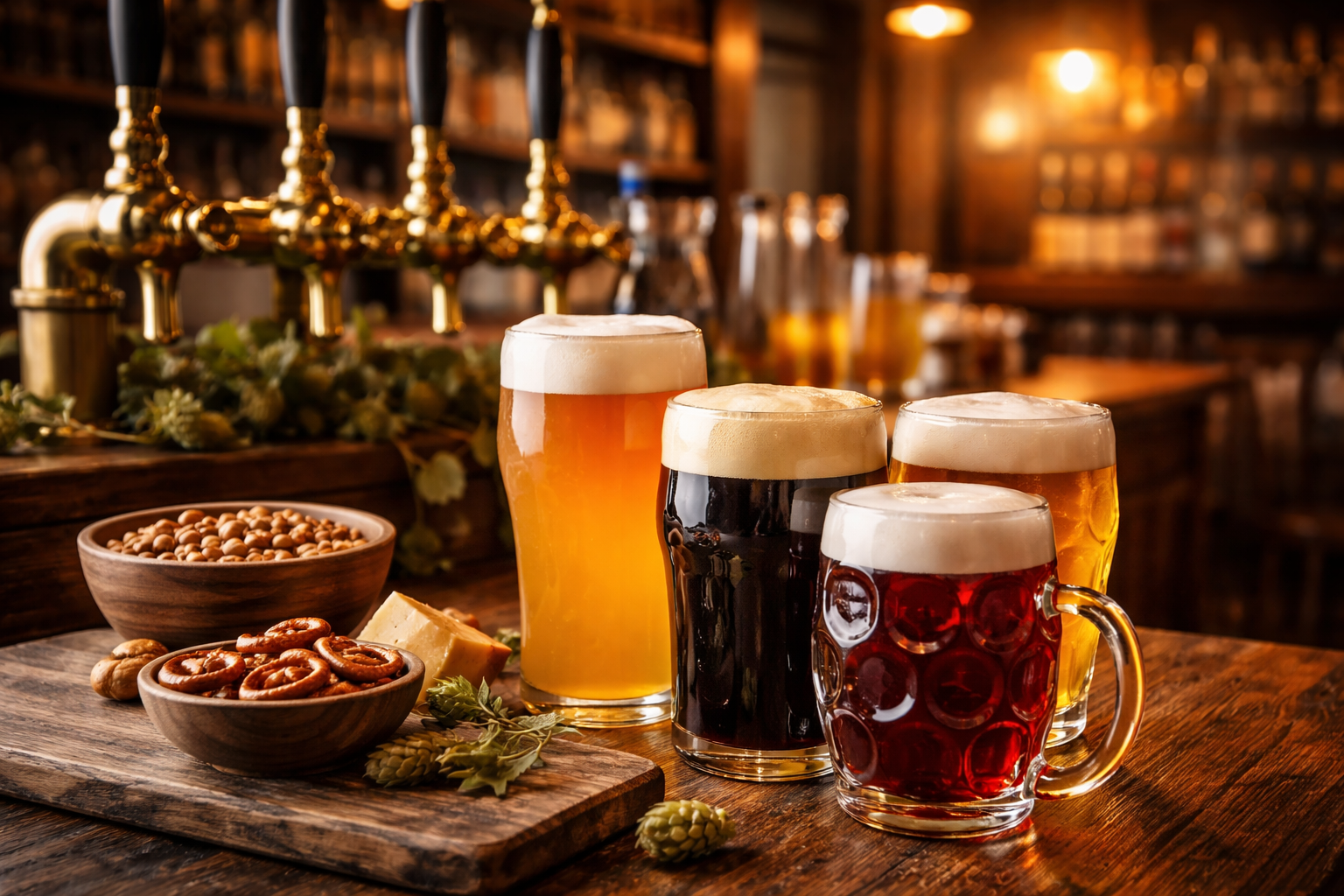

Every year brewers and the UK beer industry gather in Liverpool for BeerX and in this feature we share some thoughts from Annabel Smith a Beer Sommelier from the Guild of Beer Sommeliers who ran a session on Classic British Beer Styles. She looked at three styles and modern interpretations of each.
First up was stout. This was originally a name for any strong beer – not necessarily dark beer. It originated as a strong form of porter, which emerged in early 18th-century London by blending young beers with aged beers. Porter was the first mass produced commercial ale. Popular among working-class ‘porters’, known for its affordability and nourishing qualities. Her modern interpretation for this was Cairngorm Black Gold.
Next up was pale ale. In the early 1700s: Coke (a smokeless coal) used to dry malt. It produced lighter-coloured malt without smoky flavour. This allowed brewers to make “pale” ales for the first time. Sulphate rich water accentuated hop bitterness, defining the style and pale ales became associated with quality, clarity, and refinement. Her modern interpretation for this was Ossett White Rat.
Finally Annabel looked at mild, which was originally a general term for fresh beer, made and sold quickly. It had relatively low bitterness (milder) and greater emphasis on malt character compared to pale ales. All beers were once known as mild until they had matured, and because mild did not need to be aged it was much cheaper. Its sweetish flavour, drinkability and modest strength made it an ideal thirst quencher after working in a mill or a pit. This led to associations with the working classes. Her modern interpretation for this was Rudgate Ruby Mild.
Conclusion
What do these British styles have in common? They were originally all produced in cask and still are to this day. Annabel suggested our legacy should be to not only continually evolving these beers, but also to pass on the skills of looking after cask to the next generation. We think success in today’s on-trade isn’t about choosing between tradition and innovation — it’s about using both to meet evolving consumer demand. If you would like to see Annabels full presentation or are interested in finding out more about the Guild of Beer Sommeliers contact: info@beer-sommelier.org.uk or visit www.beer-sommelier.org.uk